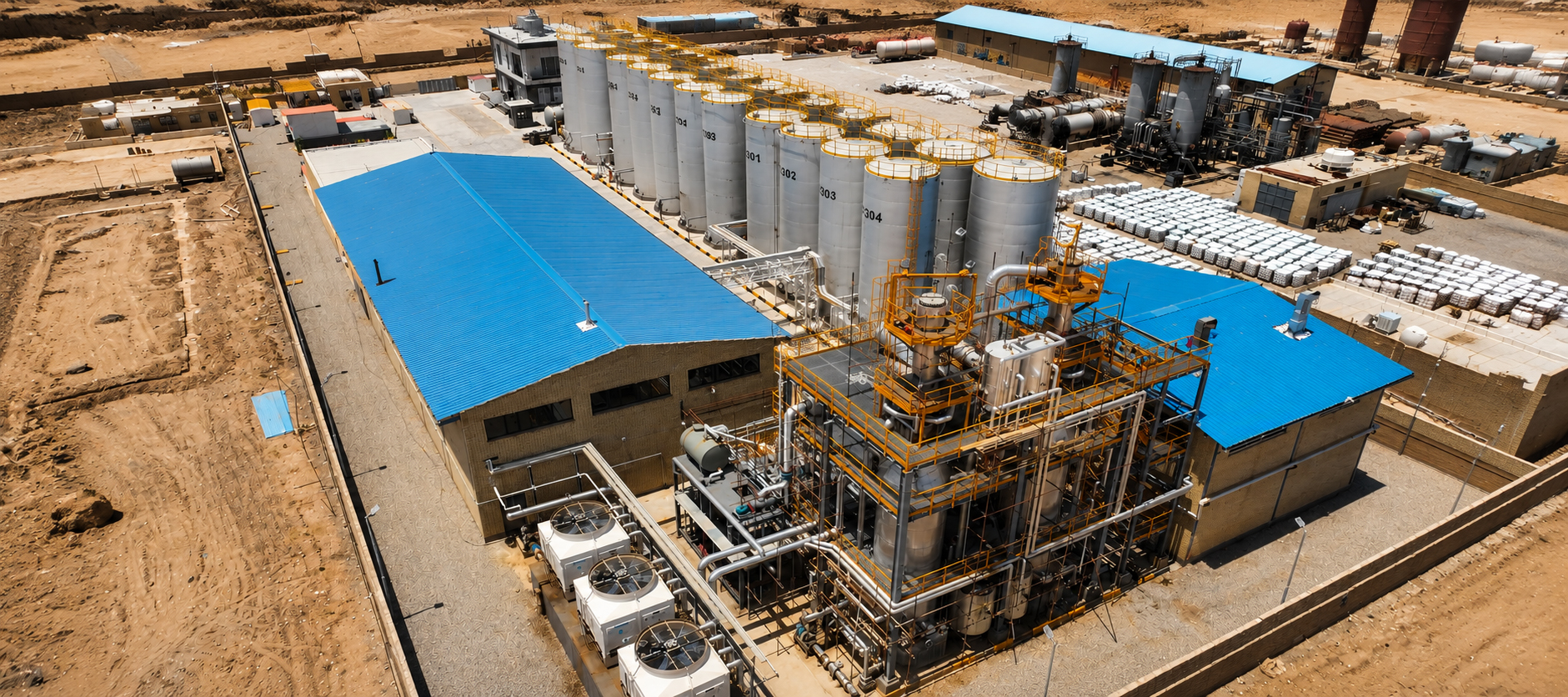
Most refineries start with crude. We start with oil that has already done its job — drained from gearboxes, hydraulic systems and engines, then trucked to our gates for a second life. The route from that messy feedstock to a clear, repeatable base oil is shorter than people expect, but every step has to be respected. Here is the walk we take it on.
01 A different starting point
Virgin base oil refining begins with crude and a long string of separation steps. Recycled base oil refining starts at a different point on the curve: with used lubricating oil that already lived inside a working machine. The hydrocarbon backbone is mostly intact. What we are removing is everything that does not belong — water, sediment, additive residues, and the heavy ends produced by thermal stress.
Done well, the result is a base oil that performs in line with virgin Group I oils for blending and industrial uses, at a fraction of the embodied carbon. Done badly, the result is a dark, smelly liquid that no formulator will touch. The difference is process discipline.
02 Feedstock screening
The first decision happens at the truck. Every incoming batch is sampled and tested in our laboratory for water content, density, flash point, viscosity and visible contamination before it is approved into the inlet tanks. Feedstock that looks "fine" but smells of fuel or solvent gets rejected — those contaminants destroy yield and quality downstream.
Accepted batches are segregated by viscosity grade so they can be fed into the right process line. Light, low-viscosity used oil heads toward Spindle-grade output. Heavier batches feed the SN300 and SN500 lines. Mixing grades upstream is a quiet way to ruin a week of production.
03 Pre-treatment
Before anything goes near the distillation columns, the feedstock is dehydrated and filtered. Water in a vacuum still is a liability — it flashes, surges, and disrupts the temperature profile that gives us clean cuts. Solids damage pumps and clog packing.
This is unglamorous work. Settling, filtration, controlled heating to drive off water and light ends. Done patiently, it makes everything that follows easier.
A well dehydrated, well filtered feedstock gives the distillation column a stable thermal envelope to work in. Skip it, and every cut downstream pays the price.
04 Vacuum distillation
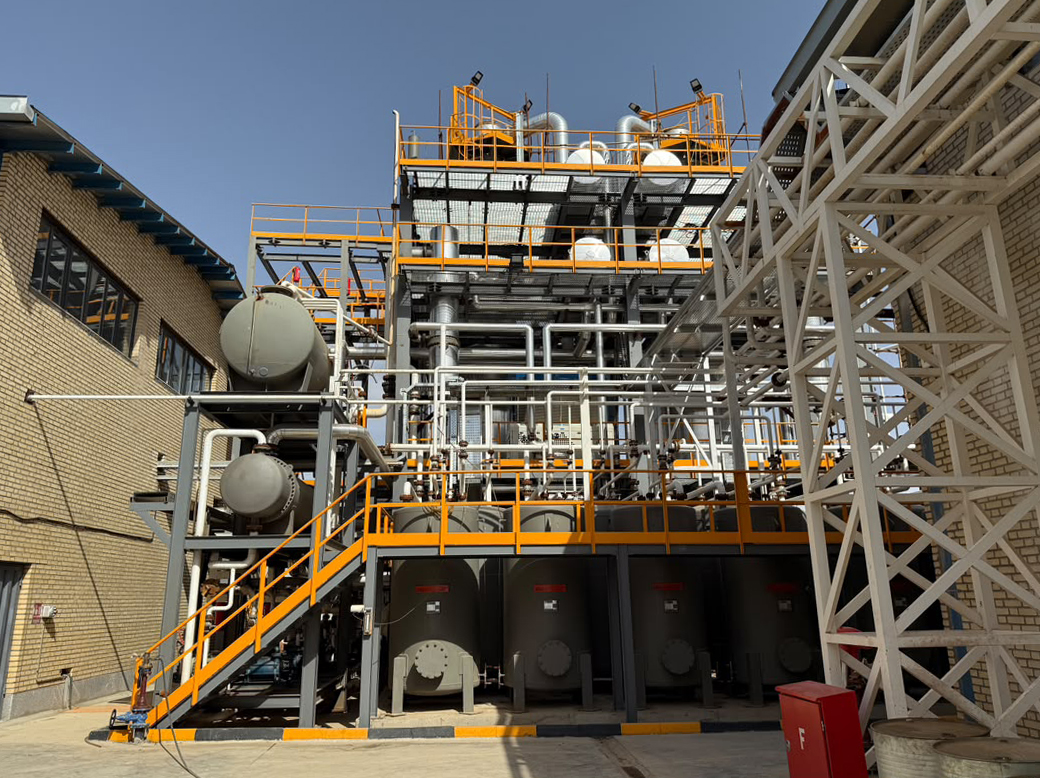
This is the headline step. Inside our advanced vacuum distillation column, pressure is dropped well below atmospheric, which lowers the boiling point of the hydrocarbons we want to separate. Lower temperatures mean less thermal cracking, which means better colour, lower odour and tighter specifications in the final product.
As the feed climbs the column, side draws collect different cuts based on operating temperature and boiling range. The lightest cut becomes Spindle Oil. Heavier draws progressively become SN150, SN300 and SN500. The bottoms — the densest hydrocarbon residue — leave the column as our Vacuum Distillation Residue (VDR), which goes on to feed bitumen and industrial-fuel markets.
Two operators, three screens, a lot of decisions made on the back of viscosity readings taken twenty minutes ago. That is what good vacuum distillation actually looks like.
05 Polishing & finishing
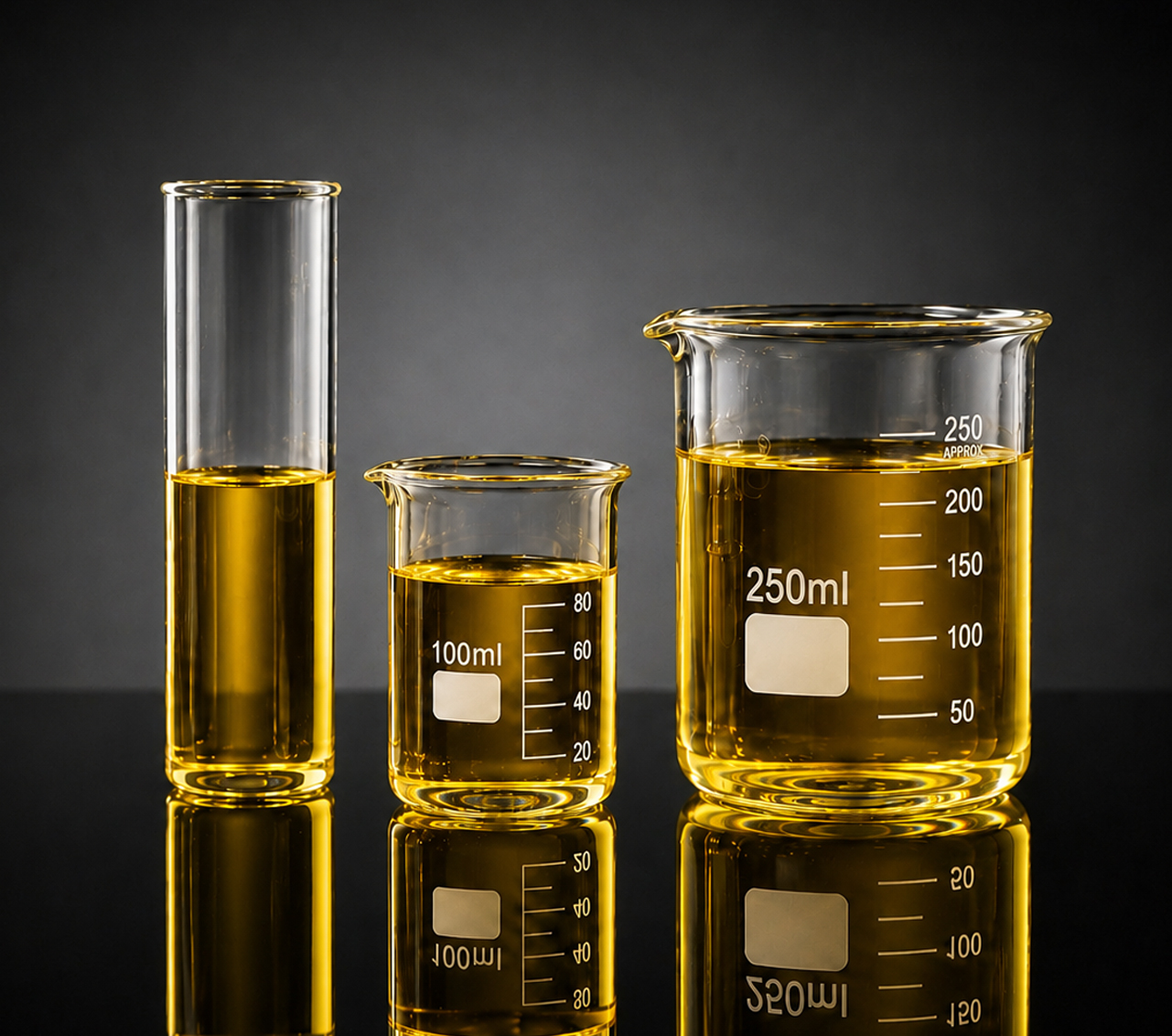
Distillation gives us oils with the right viscosity profile. Polishing gives us oils with the right appearance and stability. Each cut is passed through a finishing treatment that removes the last traces of colour bodies, polar contaminants and oxidation residue, producing the clear amber appearance customers expect.
This stage is where Group I-equivalent base oils earn their keep. A poorly polished oil might pass viscosity tests but darken within weeks in storage. A properly polished oil holds its colour, odour and acid number for the long haul.
06 Quality verification
Nothing leaves the refinery without a Certificate of Analysis. Our in-house laboratory runs each finished batch through the standard ASTM methods that the lubricant industry expects:
- Kinematic viscosity at 100 °C — ASTM D445
- Viscosity index — ASTM D2270
- Flash point — ASTM D92
- Pour point — ASTM D97
- Colour — ASTM D1500
- Density at 15 °C — ASTM D1298
Each batch is tagged to a COA reference. If a customer flags a concern in three months' time, we can pull the exact production data for that drum. That traceability is the difference between a vendor and a partner.
07 Four grades, one polishing standard
Coming out the end of this process are four production grades and one specialty:
- Spindle Oil — viscosity 3.0–4.1 cSt at 100 °C, used in textile spindle and high-speed machinery applications.
- SN150 — viscosity 4.1–5.6 cSt, viscosity index ~100, for light-duty lubricants and industrial blending.
- SN300 — viscosity 5.6–8.5 cSt, general-purpose lubricant manufacturing.
- SN500 — viscosity 9–11 cSt, the workhorse for heavier formulations and gear / hydraulic applications.
- Vacuum Distillation Residue — the bottoms stream, sold separately for asphalt, roofing, and industrial fuel blending.
The full datasheet for every grade is available on the Specifications page with downloadable PDFs.
08 Why it matters
Every tonne of used oil we re-refine displaces a tonne of virgin base oil that would otherwise need to be produced from crude. The energy saving, the avoided extraction, and the diversion of a hazardous waste stream from incineration are all real.
For our customers, the value is more mundane: a stable supply at a competitive price, with documentation that satisfies their auditors and a product that performs in their formulations batch after batch. That is what we have built the process for. The sustainability story is the bonus.
Want the specs?
Every grade has a downloadable PDF datasheet with ASTM-method test ranges, density, flash point and viscosity index.