Atmospheric distillation gets the spotlight in textbooks. Vacuum distillation gets the heavy lifting in real refineries. It is the step that decides whether a refined oil is genuinely good or merely sellable — and the part of the process most operators are quietly the proudest of.
01 The chemistry, simply
Distillation works by exploiting one fact: different hydrocarbons boil at different temperatures. Heat a mixture, the lighter molecules vaporise first, condense them somewhere cooler, and you have a fractional separation. Stack enough of these separations in a single column and you can pull out a whole catalogue of cuts in one pass.
The catch is that hydrocarbons big enough to be useful as base oils boil at temperatures high enough to thermally crack. Crack them, and you have made the wrong molecules — short ones, dark ones, unstable ones. The product is technically still oil. It just is not a product you want to sell.
02 Atmospheric vs vacuum — and why the second one matters
Standard atmospheric distillation runs at sea-level pressure. Beyond a certain temperature, the heavy fractions you most want to recover begin to break down rather than vaporise cleanly. That ceiling is the reason vacuum distillation exists.
Lower the pressure inside the column — well below atmospheric — and you lower the boiling point of every fraction at the same time. The same cut now vaporises at a substantially lower temperature, well below the cracking threshold. The chemistry survives the separation. The oil keeps its colour, its viscosity index, and its acid number.
03 What the column actually looks like
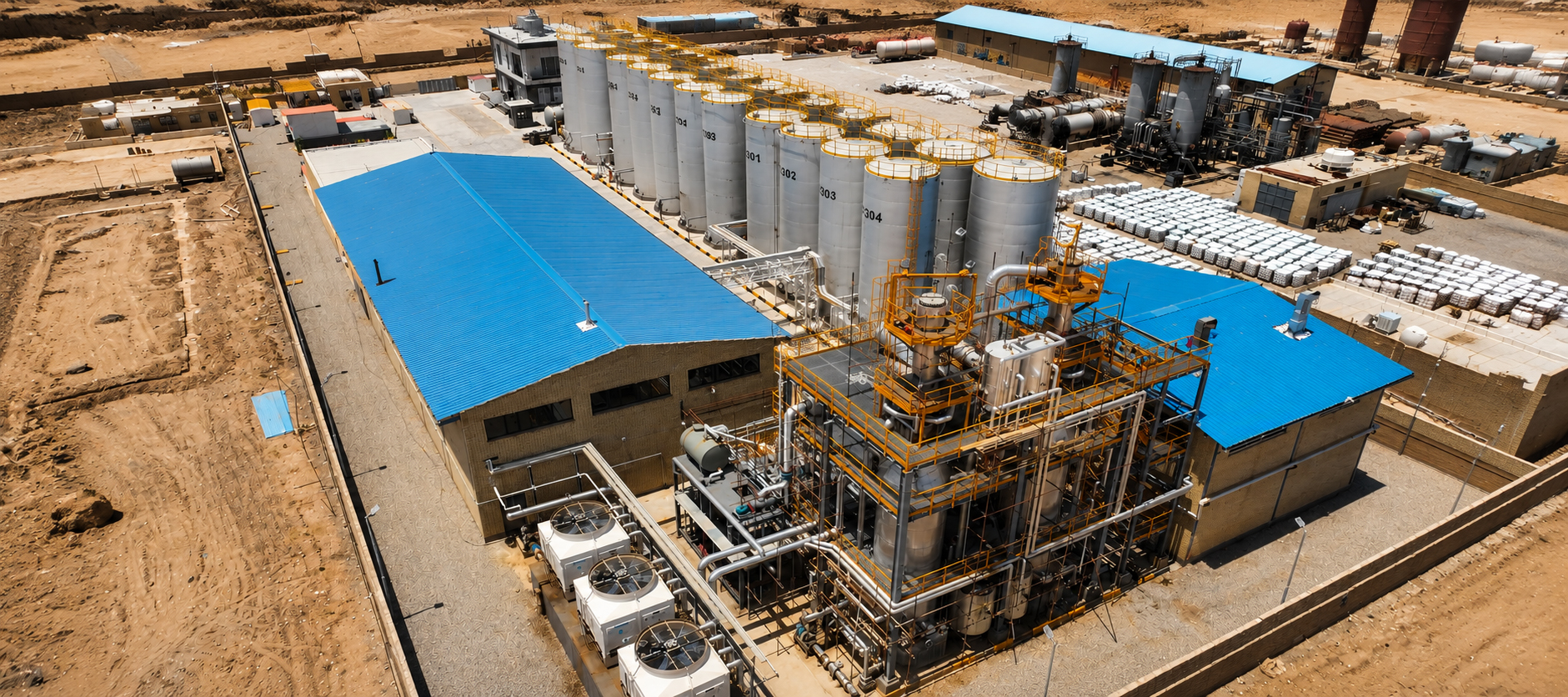
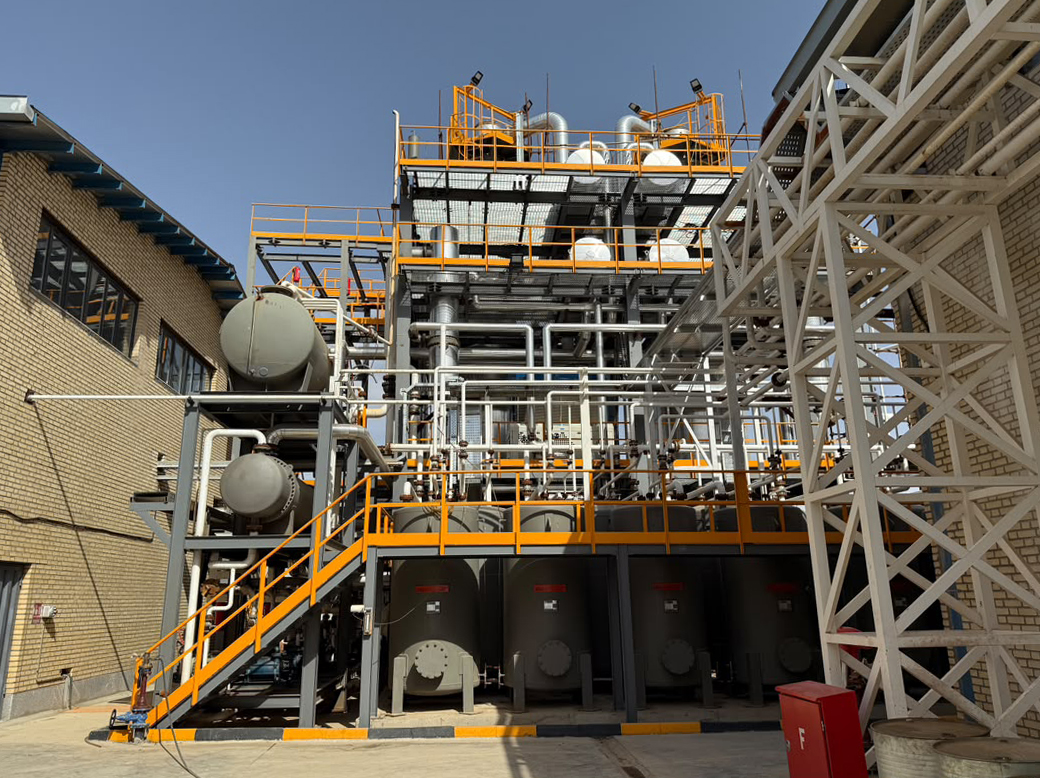
From the outside, a vacuum distillation column is a tall steel tube with insulation, a heater at the bottom, a condenser at the top, and a series of side draws marking the cuts. Inside, the column is packed with structured packing or trays that maximise the surface area on which vapour and liquid can meet and exchange.
The pressure differential is held by a vacuum system — typically a combination of steam ejectors or vacuum pumps that pull non-condensables out of the top of the column. The reflux ratio, the temperature profile and the draw-off rates are continuously balanced by the operating team. It looks calm from the outside. It is anything but, on the control screens.
04 Cuts and side streams
In our process, the column produces a graded series of fractions:
- An overhead light cut that becomes Spindle Oil (viscosity 3.0–4.1 cSt at 100 °C).
- A mid cut that becomes SN150 (4.1–5.6 cSt) and feeds light lubricant formulations.
- A heavier mid cut, SN300 (5.6–8.5 cSt), the general-purpose workhorse.
- A heavy bottom-side cut, SN500 (9–11 cSt), for the heavier formulations and gear / hydraulic blends.
- The column bottoms — the densest stream — leave as Vacuum Distillation Residue, sold separately for asphalt, roofing membranes and refinery feedstock.
Every one of those cuts is the same column doing its job differently — just at a different elevation, a different temperature and a different boiling range.
05 Why lower temperatures matter
Three reasons, all of them quietly important to a formulator.
1. Colour stays bright
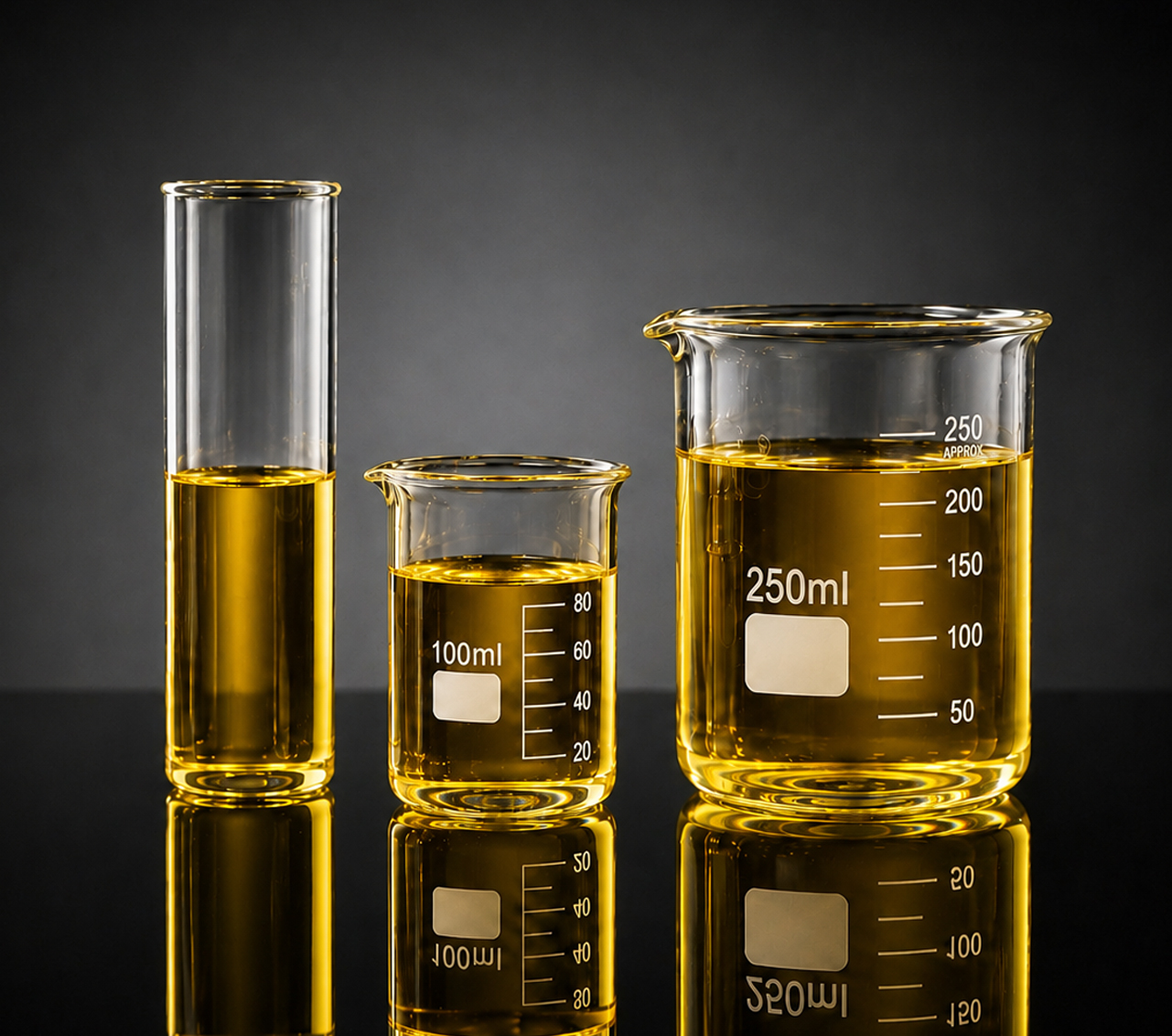
Thermal cracking creates polyaromatic structures that absorb in the visible spectrum and darken the oil. A clean vacuum cut comes out clear amber and stays that way through storage.
2. Odour stays low
The same cracked molecules contribute to oxidation-derived odours that a customer's quality team will reject on the loading platform.
3. Viscosity index holds
Cracked oils show degraded viscosity-temperature behaviour. A properly cut SN300 holds its viscosity index at 80–120 — the range expected by lubricant blenders.
06 The ASTM checklist
Every cut is verified against the test methods customers expect to see on their COA:
- Kinematic viscosity — ASTM D445
- Viscosity index — ASTM D2270
- Flash point — ASTM D92
- Pour point — ASTM D97
- Colour — ASTM D1500
- Density at 15 °C — ASTM D1298
Numbers a customer can put against numbers in their own spec. That is the contract.
The Specifications page has the full test ranges for every grade we ship, with downloadable PDF datasheets.
07 Where this fits in the bigger picture
Vacuum distillation is not the only step that matters. Feedstock screening matters. Pre-treatment matters. The finishing and polishing steps that follow distillation matter just as much, since they are what take a technically clean oil and turn it into something formulators trust.
But if any one step were going to be called the step — the one that decides whether the rest of the process has anything good to work with — it would be this one. The polite separation.
Want the full process?
Read our walk-through of the recycled base oil process, from feedstock screening to finished grade.